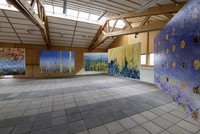
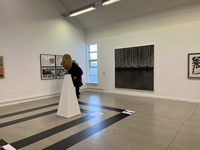
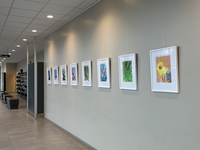
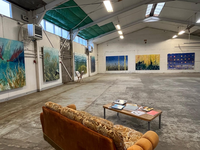
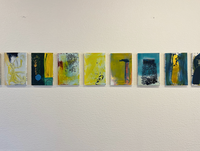
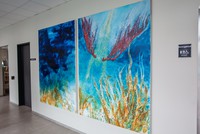
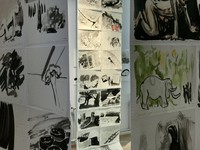
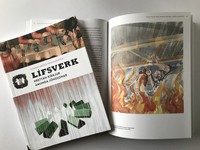
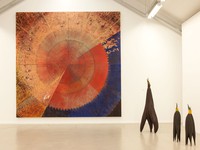
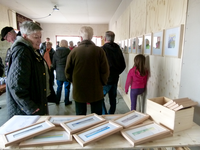
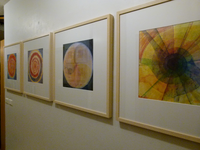
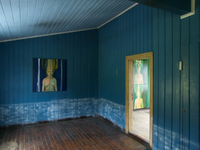
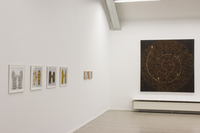
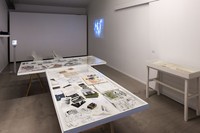
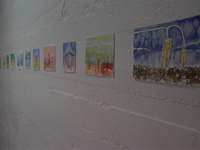
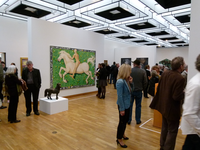
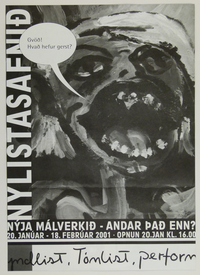
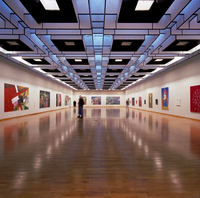
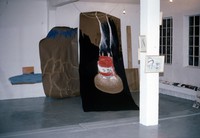
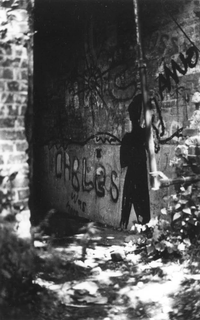
Guðrún opened the exhibition INSIDE in the new Visitor Center at Hellissandur on Saturday, January 13. The exhibition will last until April 24. It is open during the opening hours of the National Park Visitor Center or daily from 10:00 a.m. to 4:00 p.m.
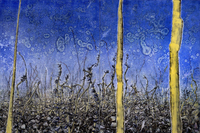
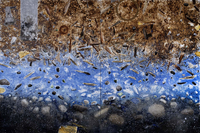
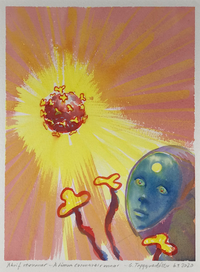
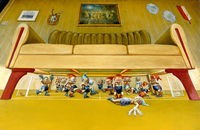
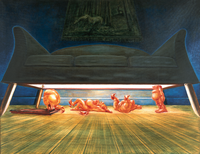
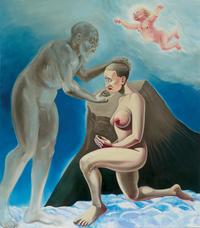
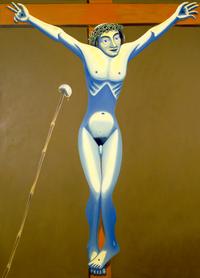
The works shown here were created with the intention of delving into the earth, the geological history and the material world, quoting civilization and examining the signs of the times. I consciously confuse strata and relics to ask questions. The earth is the source of all qualities and it retrieves them in an eternal cycle in which we are both an important and an insignificant element.
About the idea:
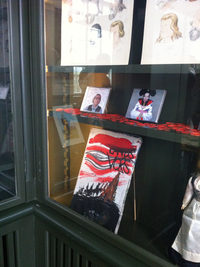
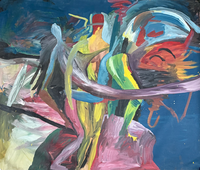
The original idea for the painting arose when I was driving in Ísafjörður fjord in June 2023, on my way to coast cleaning at Hornstrandir, and I was totally amazed by this red stripe in the rock that could be seen in many places where it had been blasted for road construction. I began to study these red stripes and found out that the red stripe is caused by the fact that Iceland had a tropical climate about 6-7 million years ago where palm and banana trees and other tropical vegetation covered the land, but during major disasters this material oxidized and petrified or combined with volcanic gases and got this red color.
Receding glacier makes the red stripe visible:
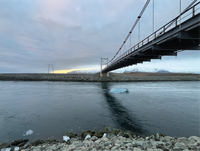
My proximity to the glacier, magnificent rocks and ice during my job as a park ranger in Vatnajökull National Park in the summer of 2023 had a great and strong impackt on me. I was processing the fact that the glacier has covered everything, retreated and grown alternately, but is retreating again. The remarkable thing is that the red stripe is now clearly visible in the Southeast, e.g. near Þröng by Breiðamerkurjökull, where the glacier has retreated enormously and the red stripe is now clearly visible in the rock at the base of Fellsfjall.
About the idea:
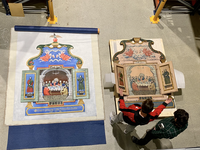
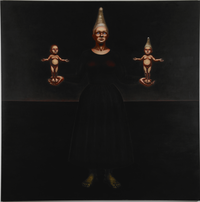
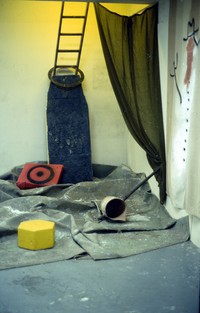
The work is based on juxtaposing cultural relics from various periods, e.g. strict forms that belong to the present or the future on the one hand and quotes from centuries-old masterpieces from Icelandic art history on the other. The stratas are mixed up and the earthy qualities of soil, precious stones, metals and ashes collide in an eternal flux of solid and liquid substances.
The whirl and the carved relic:
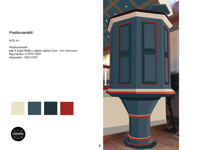
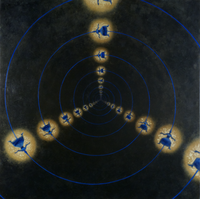
On an altarpiece from a Búðir church in Snæfellsnes, which is very badly damaged and stored in the National Museum, you can see a whirl or winding that fascinated me so much that I used the form in the work. The whirl and its meaning is interesting. It is probably supposed to represent the journey of the wise men as it bears three golden crowns of the Magi´s. The carved relic on the other hand, is by Ámundi Jónsson and had to be a part of the scene.